Blog
Graviron Aerospace Appoints Former NASA Engineering Leader Nicholas M. Shur as Advisor for Mission Architecture

July 27, 2026
Graviron Aerospace has appointed Nicholas M. Shur as Advisor for Mission Architecture, strengthening the company’s technical advisory capabilities as it advances the development of its Orbit Keeper satellite program.
Shur brings more than four decades of aerospace engineering experience, including 33 years at NASA’s Goddard Space Flight Center. His experience spans structural, thermal, and mechanisms engineering across major space programs, including the Lunar Reconnaissance Orbiter (LRO), Global Precipitation Measurement (GPM), the Nancy Grace Roman Space Telescope program, and Hubble Space Telescope servicing missions.
At Graviron, Shur will advise the leadership team on mission architecture, spacecraft systems engineering, technical decision-making, design reviews, and long-term product development as the company works toward its first commercial orbital mission.
Engineering Orbit Keeper
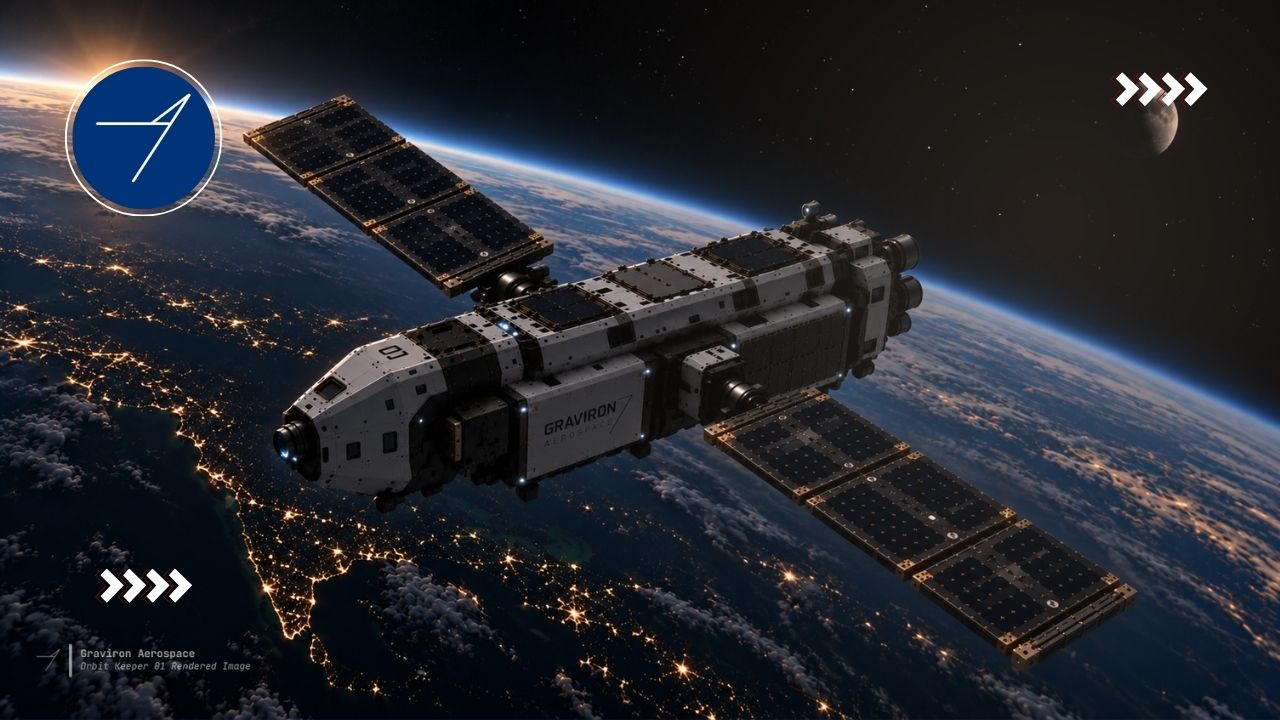
Graviron is developing Orbit Keeper, a standardized satellite program designed to establish distributed data centers in orbit. Through a fleet of orbital computing satellites, the company aims to provide onboard computing capacity for AI and other compute-intensive workloads in Low Earth Orbit (LEO). Hosted payload accommodation is an additional capability of the program.
The initial spacecraft configuration, Orbit Keeper 01 Vector, is currently in development, with its first commercial mission targeted for Q2 2028.
Developing an orbital computing platform requires coordinated engineering across spacecraft systems, including structural design, power generation, thermal management, avionics, communications, and onboard computing. Mission architecture provides the framework for integrating these elements into a spacecraft designed around defined operational and technical requirements.
Shur’s background in spacecraft engineering and mission development will inform Graviron’s technical reviews and architectural decision-making as the Orbit Keeper program progresses.
Bringing Deep Aerospace Experience to an Early-Stage Program
Building a spacecraft involves engineering decisions that shape not only the initial mission but also the platform’s ability to evolve and support future deployments.
For Graviron, this includes developing standardized spacecraft configurations and interfaces that can support a growing fleet of orbital computing satellites. Establishing a consistent engineering approach is an important part of building a platform intended for successive missions.
Experienced technical guidance can help evaluate engineering trade-offs, review system-level decisions, and maintain a coherent approach to spacecraft development as the program advances.
Shur’s appointment reflects Graviron’s approach to combining focused product development with experienced aerospace engineering guidance.
Building Toward the First Commercial Mission
Graviron’s first Orbit Keeper 01 Vector commercial mission is targeted for Q2 2028. The mission is intended to carry customer payloads alongside Graviron’s onboard orbital-computing capability.
Beginning in late 2028, the company plans to focus on fleet development, building on the engineering findings and operational experience gained from the initial mission.
As Orbit Keeper develops, Graviron will continue sharing updates on spacecraft development, technical milestones, customer engagements, and progress toward its commercial mission.
About Nicholas M. Shur
Nicholas M. Shur is an aerospace engineering professional with more than 40 years of experience, including 33 years at NASA’s Goddard Space Flight Center. His background includes spacecraft structures, thermal engineering, mechanisms, and contributions to major NASA missions.
At Graviron Aerospace, he serves as Advisor for Mission Architecture.
About Graviron Aerospace
Graviron Aerospace is developing distributed data centers in orbit through its standardized Orbit Keeper satellite program. The company is focused on building orbital computing capacity for AI and other compute-intensive workloads in Low Earth Orbit, with hosted payload accommodation as an additional capability.
Its first commercial mission, Orbit Keeper 01 Vector, is targeted for Q2 2028, followed by a planned focus on fleet development from late 2028.
Graviron Aerospace, Inc.