
Orbit Keeper 01
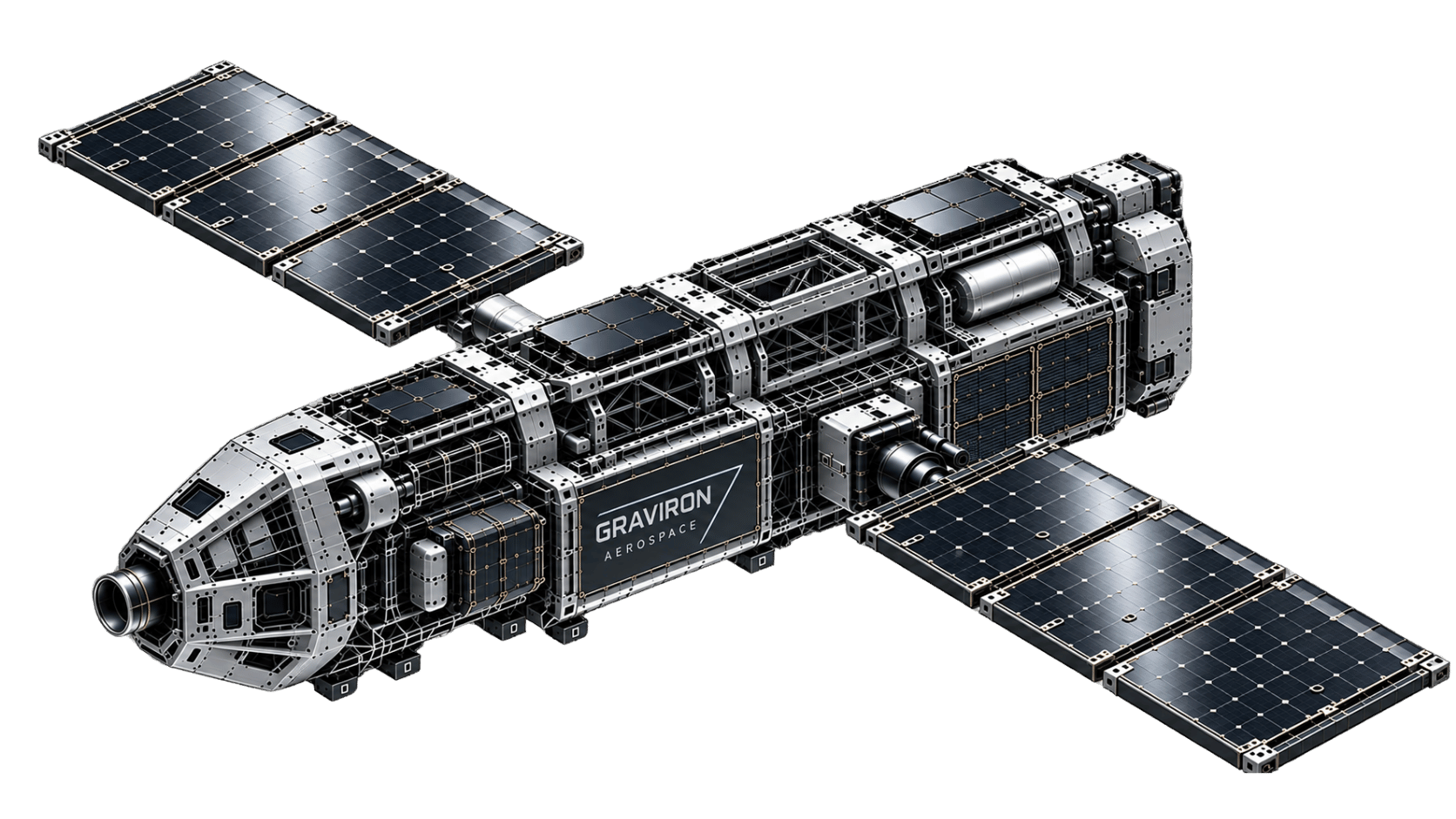
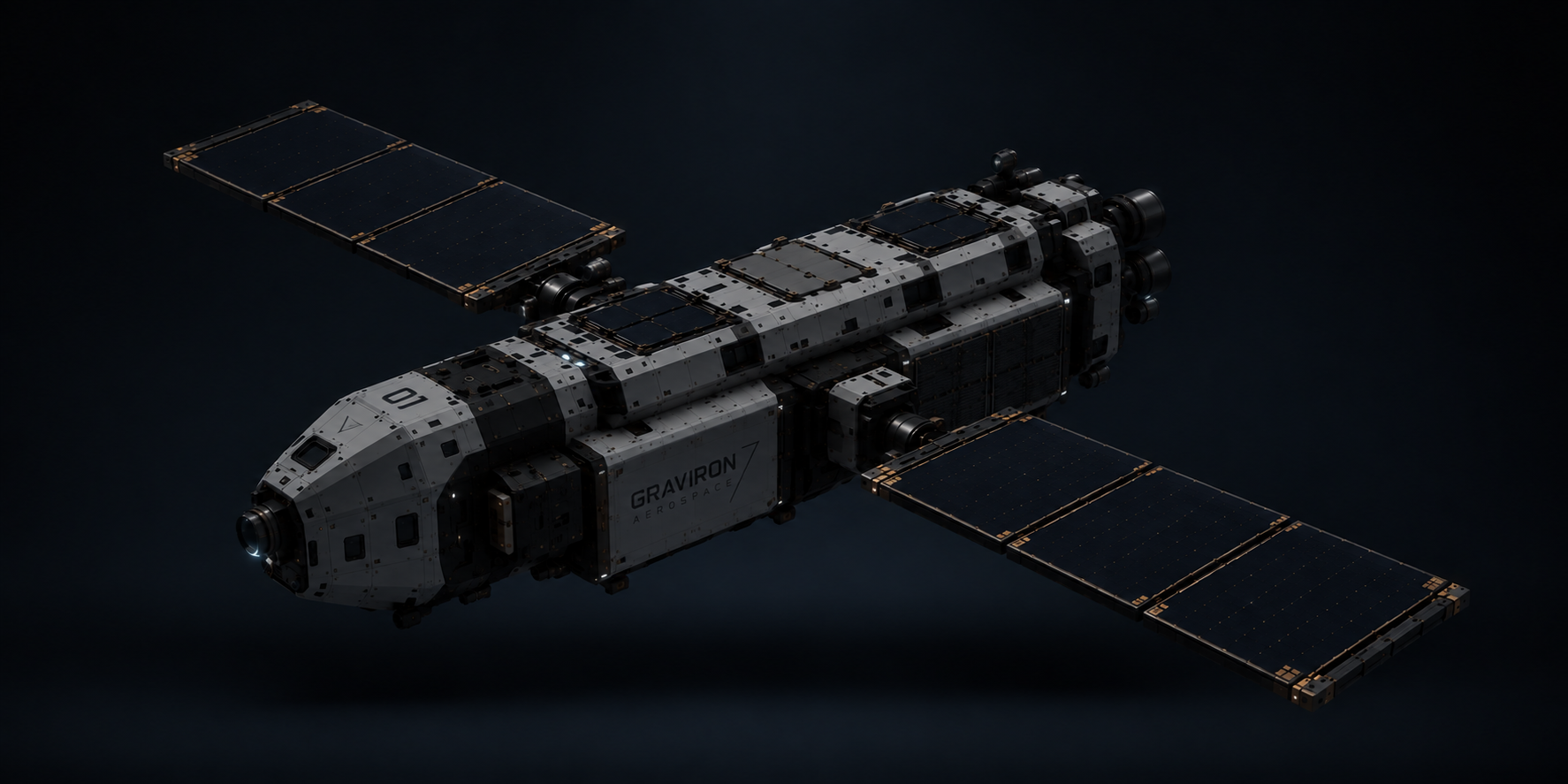
A standardized orbital platform being developed to support onboard computing hardware and hosted payloads in Low Earth Orbit, forming the foundation of Graviron's distributed orbital data-center fleet.
- Configuration: Vector
- Orbit: Low Earth Orbit
- First Mission: Q2 2028
What is Orbit Keeper 01 ?
Orbit Keeper 01 is Graviron's first spacecraft platform, being developed to support onboard computing hardware and accommodate compatible customer payloads in Low Earth Orbit.
Its computing systems will contribute to Graviron's planned distributed data-center network, while its standardized payload accommodation enables customers to operate their own hardware in orbit without developing an entire spacecraft.

Orbital Computing
Orbit Keeper 01 is being developed to carry onboard computing hardware that will provide computing capacity in orbit and contribute to Graviron's planned distributed data-center network.
+ { Primary business } +
Hosted Payloads
Orbit Keeper 01 will also accommodate compatible customer instruments, sensors, and other hardware through standardized payload positions and defined spacecraft resources.
+ { Additional commercial service } +
Inside Orbit Keeper 01
Orbit Keeper 01 is being developed around the core spacecraft systems required to support payloads and computing infrastructure in Low Earth Orbit.
Computing Hardware & Data Processing
Onboard computing hardware provides processing capacity for orbital workloads. Supporting data systems manage workload execution, data handling, and onboard storage.
Power & Thermal Management
Electrical power systems supply energy to computing hardware and customer payloads. Thermal-management systems transfer and reject waste heat generated by onboard equipment.
Communications & Data Links
Communication systems support data exchange between the spacecraft and ground infrastructure, including workload data transfer, command, telemetry, and delivery of computing results.
Avionics & Spacecraft Control
Flight computers manage spacecraft functions, while propulsion and attitude-control systems support orbital operations, positioning, and spacecraft orientation.
Key Specifications
A spacecraft under development for Low Earth Orbit operations. Vector's Phase A architecture defines payload accommodation, spacecraft resource allocation, onboard data handling, and orbital mission parameters.
Orbital Configuration
500 km Reference Altitude | Sun-Synchronous Orbit
Orbit type: Circular Sun-Synchronous Orbit (SSO)
Reference inclination: 97.4°
Orbital period: Approximately 94.6 minutes
Orbital frequency: Approximately 15.2 revolutions per day
Reference altitude range: 450–600 km under review
Electrical Power
5–10 W Average | 10–20 W Peak per Position
Average payload power allocation: 5–10 W per position
Peak payload power allocation: 10–20 W per position
Operating mode: Duty-cycle limited
Resource management: Payload operation within spacecraft power constraints
Data Handling & Storage
10–100 Mbps Peak Input | 1–2 GB per Payload
Peak payload data-input rate: 10–100 Mbps
Onboard storage: 1–2 GB partition per payload
Candidate data interfaces: Ethernet or SpaceWire
Data handling: Onboard storage and payload-data management
Interface definition: In development
Communications Architecture
S-Band TT&C | X-Band Payload Downlink
Command and telemetry: S-band baseline
Payload-data downlink: X-band baseline
Ground segment: Graviron ground infrastructure
Data delivery: Target latency of 24–48 hours, pending interface definition
Mission Operations
Hosted Payloads | Orbital Computing
Customer payloads integrated before launch
Payload operation within agreed power, data, and mission constraints
Graviron-owned onboard orbital-computing demonstration
Spacecraft design life: 3-5 years under evaluation
- Customer mission duration:
First orbital mission target: Q2 2028
* Phase A working baseline. Preliminary resource allocations and orbital parameters remain subject to engineering development. Final interfaces and mission requirements will be established through subsequent design reviews.
One platform. Three configurations.
The Orbit Keeper family is being developed around a standardized spacecraft architecture with configurations designed for different operational requirements. Starting with Vector, Graviron plans to expand the family through Horizon and Zenith, extending its capabilities across future orbital missions.

Vector
The first spacecraft configuration in the Orbit Keeper family, being developed to establish the foundation of Graviron's distributed orbital data-center network while providing hosted payload services in Low Earth Orbit.

Horizon
A planned future generation of Orbit Keeper, intended to expand orbital computing capabilities with greater onboard computing resources and enhanced capacity for Graviron's growing data-center network.

Zenith
A planned future generation focused on further expanding Graviron's orbital data-center capabilities, with greater computing resources and advanced spacecraft capabilities to support the network's long-term growth.
From development to orbit.
Graviron is developing Orbit Keeper 01 Vector as the starting point for its distributed orbital data-center network. The roadmap begins with its first commercial mission, followed by the development and expansion of the Orbit Keeper fleet.
Mission Timeline
Spacecraft Development
Development of Orbit Keeper 01 Vector, advancing its spacecraft architecture, onboard computing systems, and hosted payload capabilities toward its first commercial mission.
First Commercial Mission
Orbit Keeper 01 Vector's first commercial mission, intended to carry customer payloads alongside Graviron's onboard computing capability and establish the initial foundation for its orbital data-center programme.
Orbit Keeper Fleet Development
Begin developing additional Orbit Keeper satellites, expanding orbital computing capacity and progressively building Graviron's distributed data-center network.
Frequently Asked Questions
Answers to the questions we hear most often from customers, partners, investors, and potential future team members.
What is Orbit Keeper 01?
Orbit Keeper 01 is Graviron Aerospace’s first standardized spacecraft platform, being developed to support onboard computing hardware and hosted payload missions in Low Earth Orbit. It is the starting point for Graviron’s planned distributed orbital data-center fleet.
Is Orbit Keeper 01 a reusable orbital drone?
No. Orbit Keeper 01 Vector is not designed as a reusable orbital drone. It is being developed for its initial commercial mission, with a target operational lifetime of three to five years in Low Earth Orbit. Reusable orbital vehicles belong to Graviron’s longer-term development vision.
What is the difference between Vector, Horizon, and Zenith?
Vector is the initial spacecraft configuration currently in development. Horizon and Zenith are planned future configurations intended to expand the Orbit Keeper family’s orbital-computing capabilities and computing capacity. Their technical architectures are still under development.
What services will Orbit Keeper 01 support?
Orbit Keeper 01 is being developed to support two separate commercial services: orbital computing, providing access to computing capabilities in space, and hosted payloads, allowing customers to operate compatible hardware aboard the spacecraft.
When will Orbit Keeper 01 launch?
Graviron is targeting Q2 2028 for its first commercial mission. The mission is intended to carry customer payloads alongside Graviron’s onboard computing capability.
How will Orbit Keeper 01 contribute to Graviron's distributed data-center network?
Orbit Keeper 01 Vector will establish the initial computing node for Graviron’s planned network. Following the first commercial mission, Graviron plans to develop additional Orbit Keeper satellites, progressively expanding the network’s computing capacity.