

Building Data Centers
in Orbit.
Graviron is developing a distributed network of standardized Orbit Keeper satellites to bring AI and other compute-intensive workloads into space. The network is designed to expand its computing capacity through successive satellite deployments.
The Future of Computing Extends Beyond Earth.
As demand for AI and computing grows, terrestrial data centers face increasing pressure on electricity, land, and cooling resources. Space offers a different environment for developing the next generation of computing infrastructure.
Powering Computing with Solar Energy
Orbital solar arrays can capture sunlight without atmospheric interference. In suitable orbits, near-continuous solar exposure offers the potential for sustained power generation without relying on terrestrial electricity grids.

Rejecting Heat Through Radiative Cooling
Computing hardware generates substantial waste heat. In orbit, dedicated thermal radiators can release this heat into space through infrared radiation, potentially reducing dependence on the water-intensive cooling systems used by terrestrial data centers.
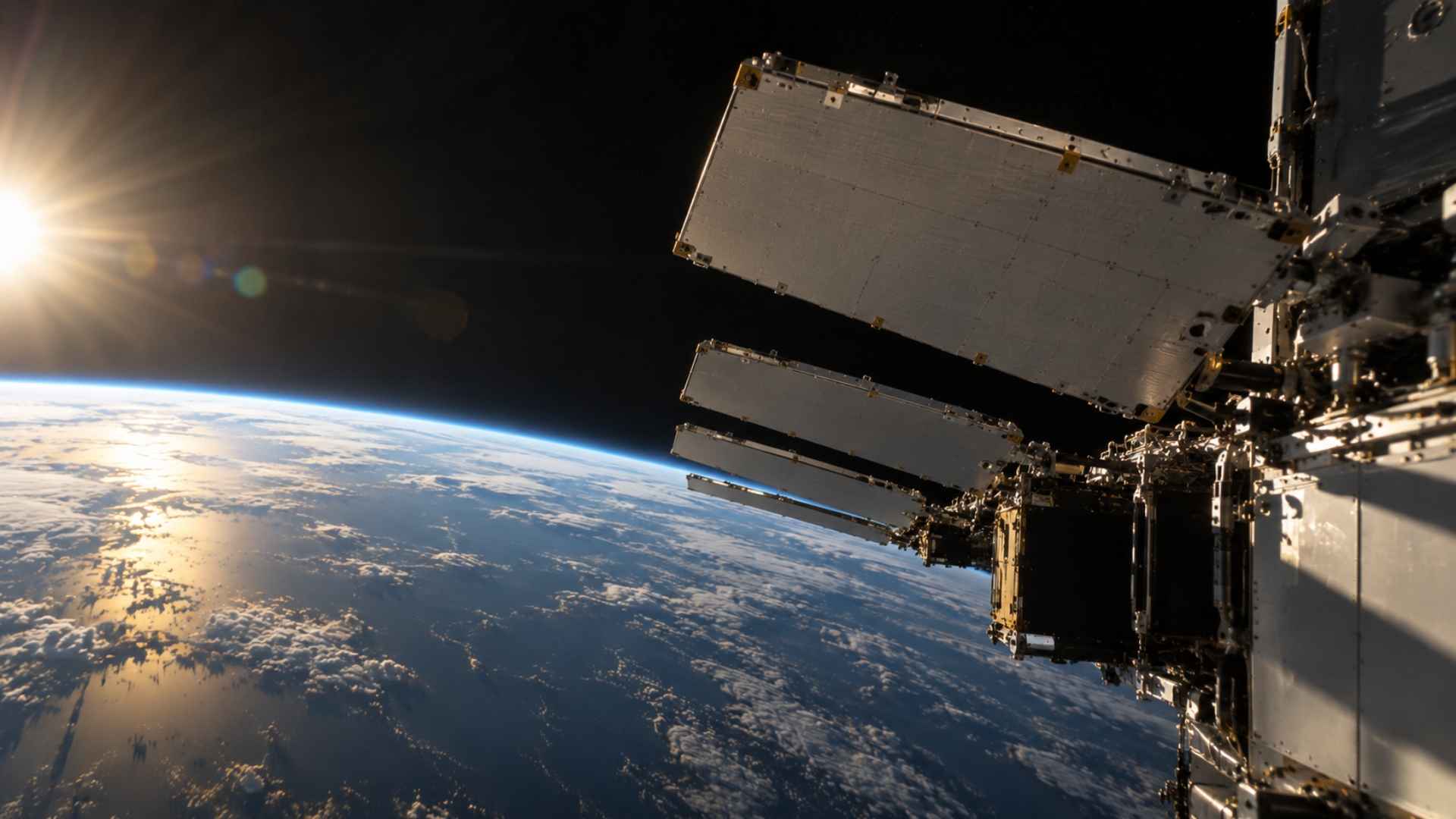
Expanding Beyond Earth's Infrastructure
As computing demand increases, terrestrial data centers require more land, electricity, and supporting infrastructure. Orbital data centers offer another potential path for expanding computing capacity beyond these terrestrial constraints.
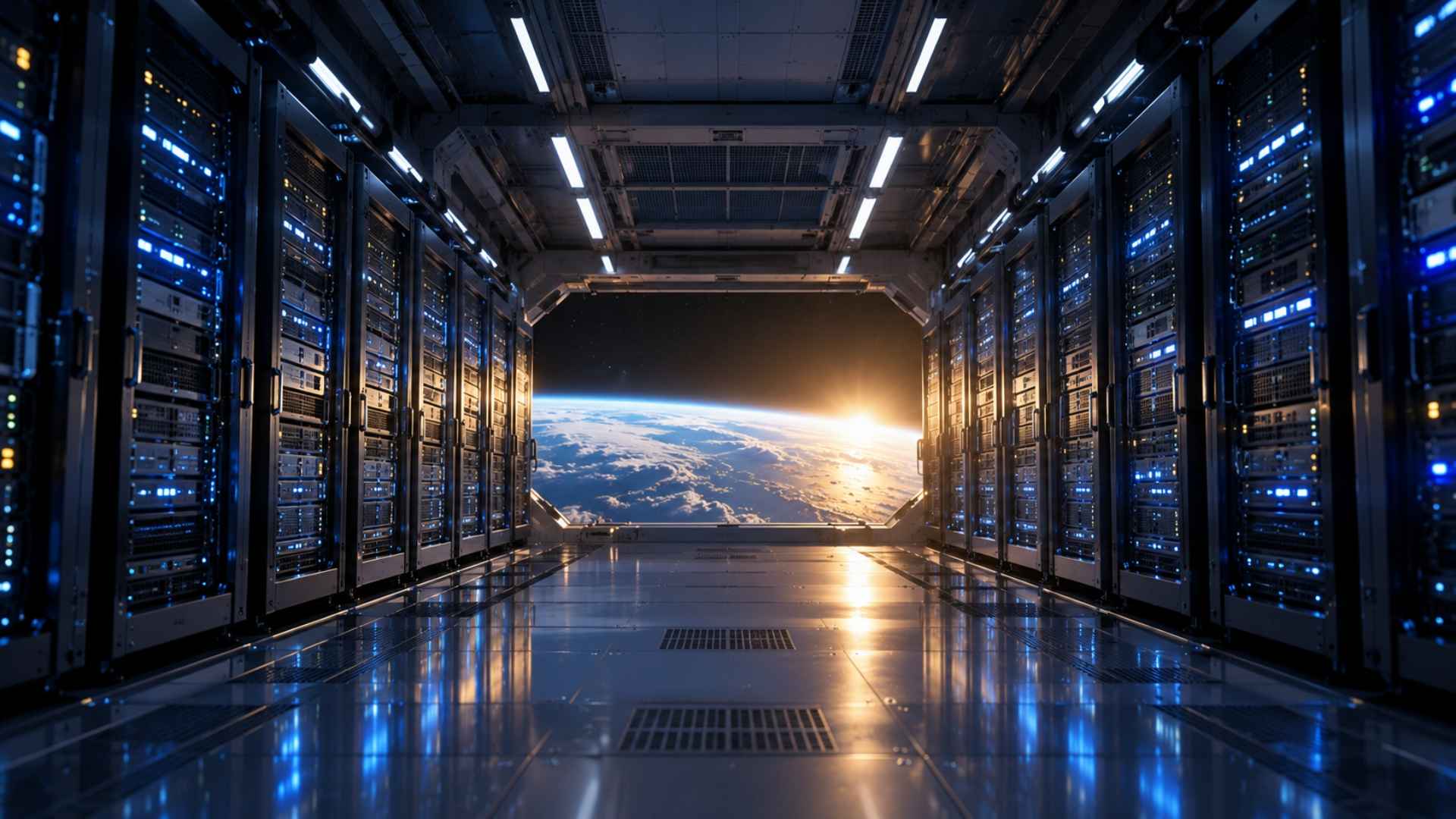
The Future of Computing Needs More Infrastructure.
As AI and digital technologies accelerate, global demand for computing capacity and electricity continues to grow. Graviron is exploring the potential of distributed data centers in orbit as a new approach to future computing infrastructure.
485 TWh
Global Data Center Energy Consumption
Estimated worldwide electricity consumption by data centers in 2025.
950 TWh
Projected Energy Demand
Expected global data-center electricity consumption by 2030, according to the IEA's central projection.
17%
Annual Energy Demand Growth
Growth in global data-center electricity consumption during 2025.
1,361 W/m²
Solar Irradiance in Space
Approximate solar power received per square metre near Earth, before conversion losses.
How Distributed Data Centers Works
A distributed data center uses multiple computing nodes operating across a network rather than relying on a single centralized facility. Graviron's approach is to build this network through a standardized fleet of Orbit Keeper satellites, adding computing capacity through successive deployments.
Deploy Computing Nodes
Each Orbit Keeper satellite carries onboard computing hardware, storage, power-generation systems, and thermal-management equipment.
Generate and Manage Power
Solar arrays supply electrical power to onboard computing systems. Dedicated thermal systems manage the heat generated during computing operations.
Run Computing Workloads
Onboard processors execute computing workloads, including AI applications and other compute-intensive tasks, with storage and supporting systems managing workload data.
Expand the Distributed Network
Successive Orbit Keeper deployments add computing capacity to the growing network. Interconnected computing nodes and communication links can support coordinated operations across the fleet.
Computing Applications
Orbital data centers could support a range of computing workloads across AI, cloud services, scientific research, and enterprise applications. Graviron aims to make computing capacity in orbit accessible to organizations beyond the aerospace industry.
AI Computing
Support AI inference, model evaluations, synthetic data generation, and other compute-intensive AI workloads through orbital computing capacity.
Scientific & High-Performance Computing
Support computationally intensive research, including climate simulations, scientific modelling, genomics, and complex numerical calculations.
Cloud & Enterprise Computing
Provide an additional source of computing capacity for cloud providers, enterprises, and organizations running large-scale data processing and batch workloads.
Space-Based Data Processing
Support processing and analysis of data generated by Earth-observation satellites and other space-based systems, potentially reducing the need to transmit raw data to Earth.
The Orbit Keeper Fleet
Graviron is developing a standardized fleet of Orbit Keeper satellites to expand computing capacity in orbit. Each successive deployment can be configured around commercial demand, allocating spacecraft resources between orbital computing and hosted payload accommodation.
Standardized by Design
Orbit Keeper satellites are being developed around a common architectural approach, with defined interfaces and repeatable spacecraft configurations. This provides a consistent foundation for expanding the fleet.
Configured Around Demand
Future spacecraft can allocate more resources to computing hardware or hosted payload accommodation depending on customer demand. This allows Graviron to adjust the service mix across successive deployments rather than building a completely different platform for every mission.
Expanding Through Successive Deployments
Starting with Orbit Keeper 01 Vector, Graviron plans to expand its fleet through successive spacecraft deployments. Each addition can increase available computing capacity and contribute to the development of a distributed orbital data-center network.
From development to orbit.
Graviron is advancing Orbit Keeper 01 Vector toward its first commercial mission, targeted for Q2 2028. Following the mission, the company plans to expand its Orbit Keeper fleet and progressively develop its distributed data-center network.
From development to orbit.
Graviron is advancing Orbit Keeper 01 Vector toward its first commercial mission, targeted for Q2 2028. Following the mission, the company plans to expand its Orbit Keeper fleet and progressively develop its distributed data-center network.
Development Timeline
Platform Development
Advancing spacecraft architecture, computing systems, subsystem development, and ground testing.
First Commercial Mission
Targeted first commercial flight of Orbit Keeper 01 Vector, carrying customer payloads alongside Graviron's onboard computing capability.
Fleet Development
Begin developing additional Orbit Keeper satellites, expanding orbital computing capacity and growing the distributed data-center network.
Frequently Asked Questions
Answers to the questions we hear most often from customers, partners, investors, and potential future team members.
What is an orbital data center?
An orbital data center is a computing facility deployed in space, using satellites equipped with processors, storage, power systems, and communications equipment to run computing workloads in orbit.
What are distributed data centers in orbit?
Distributed data centers in orbit use multiple interconnected satellites as computing nodes to form a larger orbital computing network. Rather than relying on a single large structure, this approach allows computing capacity to expand progressively as additional satellites join the network.
Why build data centers in space?
The growing demand for AI and computing is placing increasing pressure on terrestrial data-center infrastructure, particularly electricity availability, land, and cooling resources. Space-based data centers explore an alternative approach by using orbital infrastructure and solar energy to support computing workloads beyond Earth.
What computing workloads will Graviron support?
Graviron’s long-term focus is on providing computing capacity for AI and other compute-intensive workloads that can benefit from space-based infrastructure. The objective is to support workloads originating beyond the space industry, rather than limiting orbital computing to processing data collected by satellites.
How will Graviron expand its orbital data-center network?
Following its first commercial mission, Graviron plans to expand the Orbit Keeper fleet through successive spacecraft deployments. Future configurations can allocate greater resources to computing as demand grows, with the longer-term objective of developing interconnected computing nodes into a distributed orbital data-center network.
Will orbital data centers replace terrestrial data centers?
Not necessarily. Orbital data centers are more likely to complement terrestrial facilities by supporting selected computing workloads where space-based infrastructure offers advantages.
Who can use Graviron's services?
Graviron’s potential customers extend beyond the aerospace industry. These include AI companies, cloud-computing providers, hyperscalers, government and defense organizations, and enterprises with compute-intensive workloads such as scientific research, simulations, and AI model development. Space companies can also use its infrastructure for processing and managing satellite-generated data.
Through hosted payload services, Graviron also serves organizations seeking to operate compatible hardware in orbit without developing an entire spacecraft.