





Graviron Aerospace is developing autonomous orbital systems designed for precise interaction and reusable return from space.
Our core technology focuses on three foundational capabilities:
We design guidance and control systems that enable vehicles to operate safely in orbital environments, maintain stability, and execute controlled maneuvers with minimal external intervention.
Our systems are built to demonstrate safe, measured interaction with objects in orbit. Rather than aggressive capture or intervention, our approach prioritizes precision, predictability, and risk-aware operation.
Graviron vehicles are designed to survive reentry and return intact through controlled glide-based descent. This enables iterative testing, recovery of hardware, and long-term reusability.
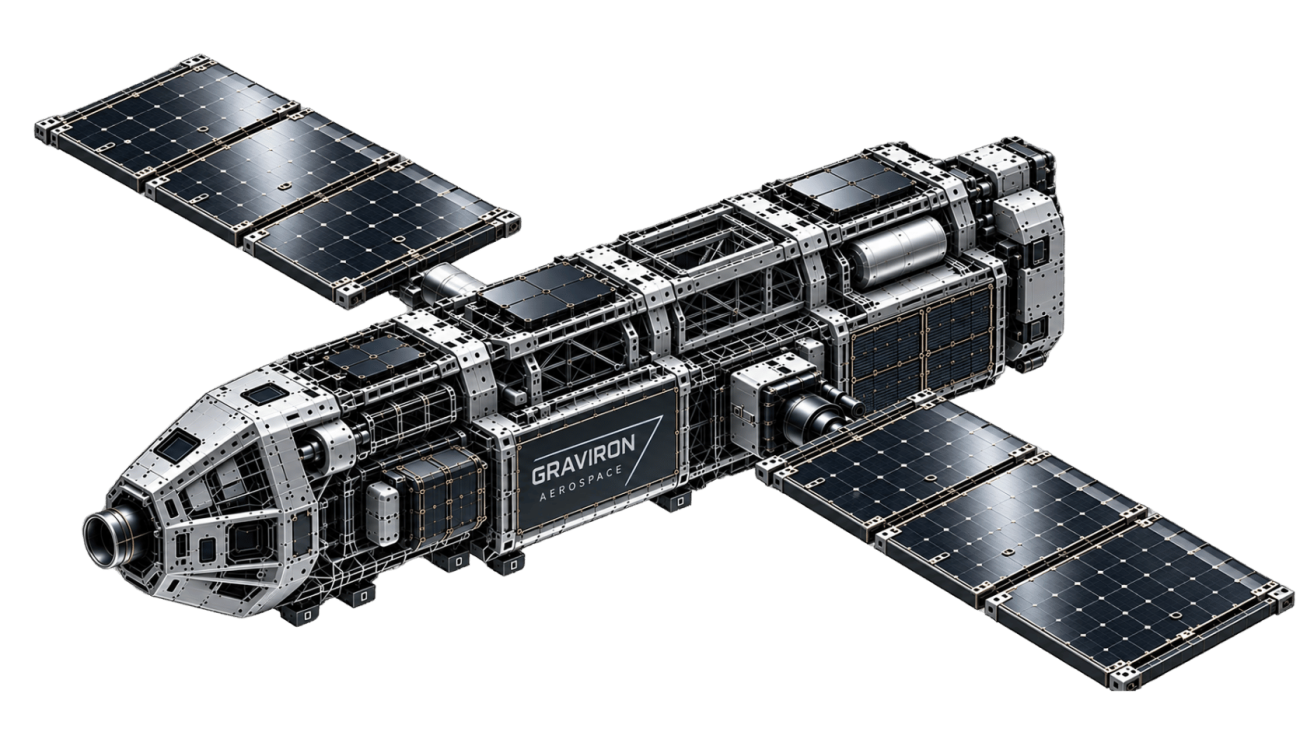
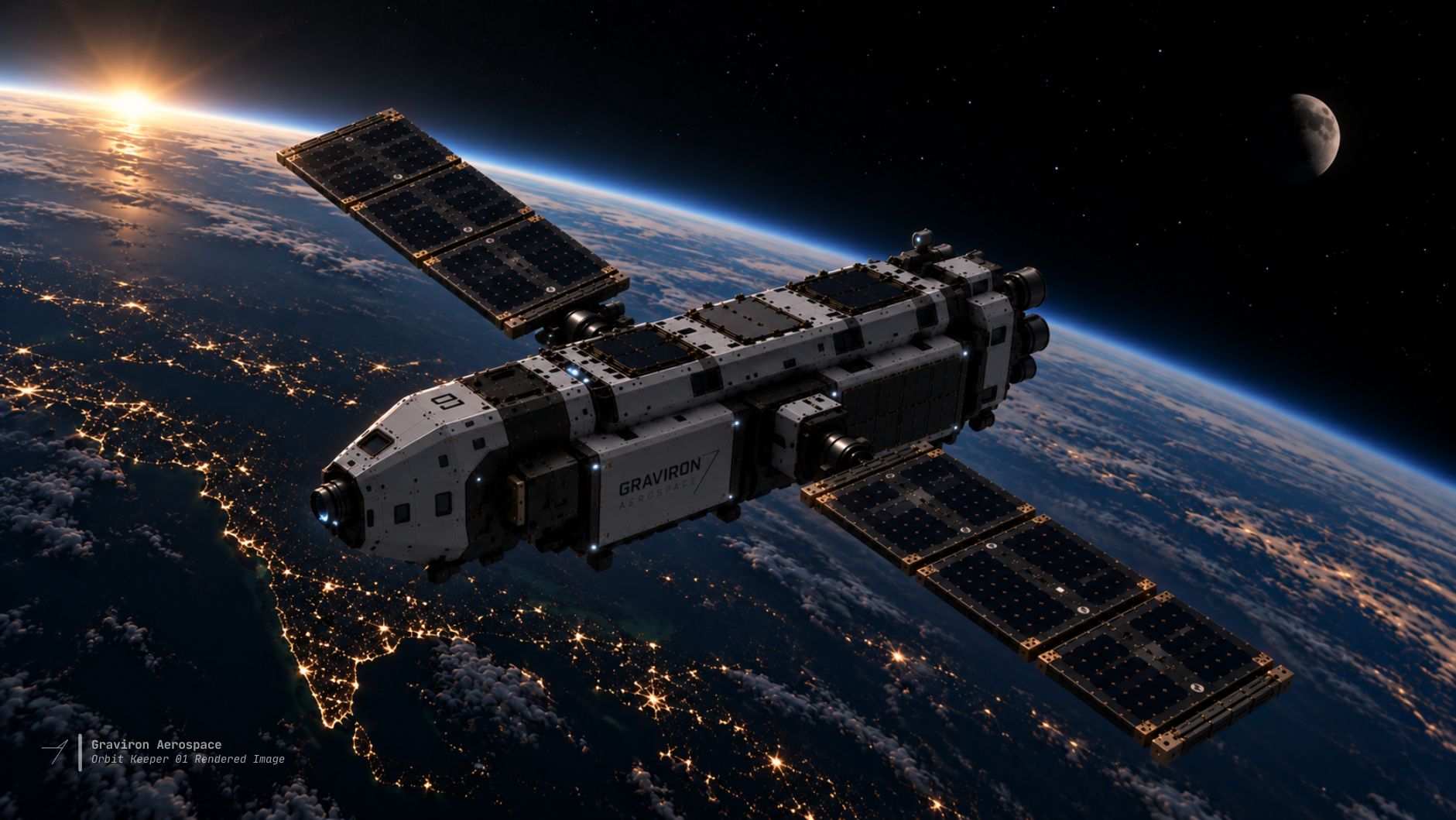
Our first system, Orbit Keeper 1, integrates these capabilities into a single experimental platform to validate controlled orbital interaction and reusable return as a foundational step toward scalable orbital infrastructure.
Graviron Aerospace is currently in the early research and development phase.
Our focus is on defining system architecture, validating control philosophy, and building the first experimental platform, Orbit Keeper 1, to demonstrate controlled orbital interaction and reusable return.
This phased approach allows us to reduce technical risk methodically before advancing to orbital demonstrations.
Answers to common questions about Graviron’s work, focus, and current stage.
Graviron Aerospace is developing reusable 3D-printed orbital drones designed for precise interaction in space and controlled glide re-entry back to Earth. Our systems combine autonomous navigation, intelligent target prioritization, and robust capture mechanisms to enable low-cost, repeatable orbital operations.
As satellite constellations grow rapidly, orbital debris is becoming a serious risk to operational satellites, insurance costs, and long-term space sustainability. Current debris removal solutions are extremely expensive and single-use. Graviron is building a reusable, lower-cost alternative that makes active debris removal economically viable and scalable.
Yes — in the near term. Our first focus is developing reusable drones for space debris removal and satellite servicing. Long-term, the same platform will evolve to support asteroid capture, stabilization, and in-space resource utilization for zero-gravity manufacturing and deep-space infrastructure.
We are in the early technical validation stage. We have built and ground-tested our 3D-printed capture mechanism, developed a proprietary orbital intelligence layer for target prioritization and risk simulation, and completed initial supplier discussions. We are preparing for atmospheric and sub-orbital testing before our first orbital demonstration.
Not yet. Our current focus is on rigorous ground and high-altitude testing to validate stability, control, and reusability. Orbital demonstrations will follow once we have sufficient technical proof and regulatory approvals in place.
We are currently operating independently while building core technology. We have secured non-binding LOIs from several satellite operators and are in active discussions with ex-YC space companies, aerospace suppliers, and technical experts. We are open to strategic collaborations that align with our development stage.
Traditional solutions rely on expensive, single-use chaser satellites. Graviron’s drones are reusable, 3D-printed, and designed for rideshare launches with controlled glide re-entry. This significantly reduces the cost per mission and enables higher frequency operations.
We aim to evolve the same reusable platform from debris removal into asteroid capture, stabilization, and in-space resource utilization — laying the foundation for sustainable space infrastructure, zero-gravity manufacturing, and deep-space exploration.
Be the first to know about new milestones, launch updates, and insider announcements