Blog
Graviron Aerospace Introduces Its Orbital Compute and Hosted Payload Services Through Orbit Keeper 01

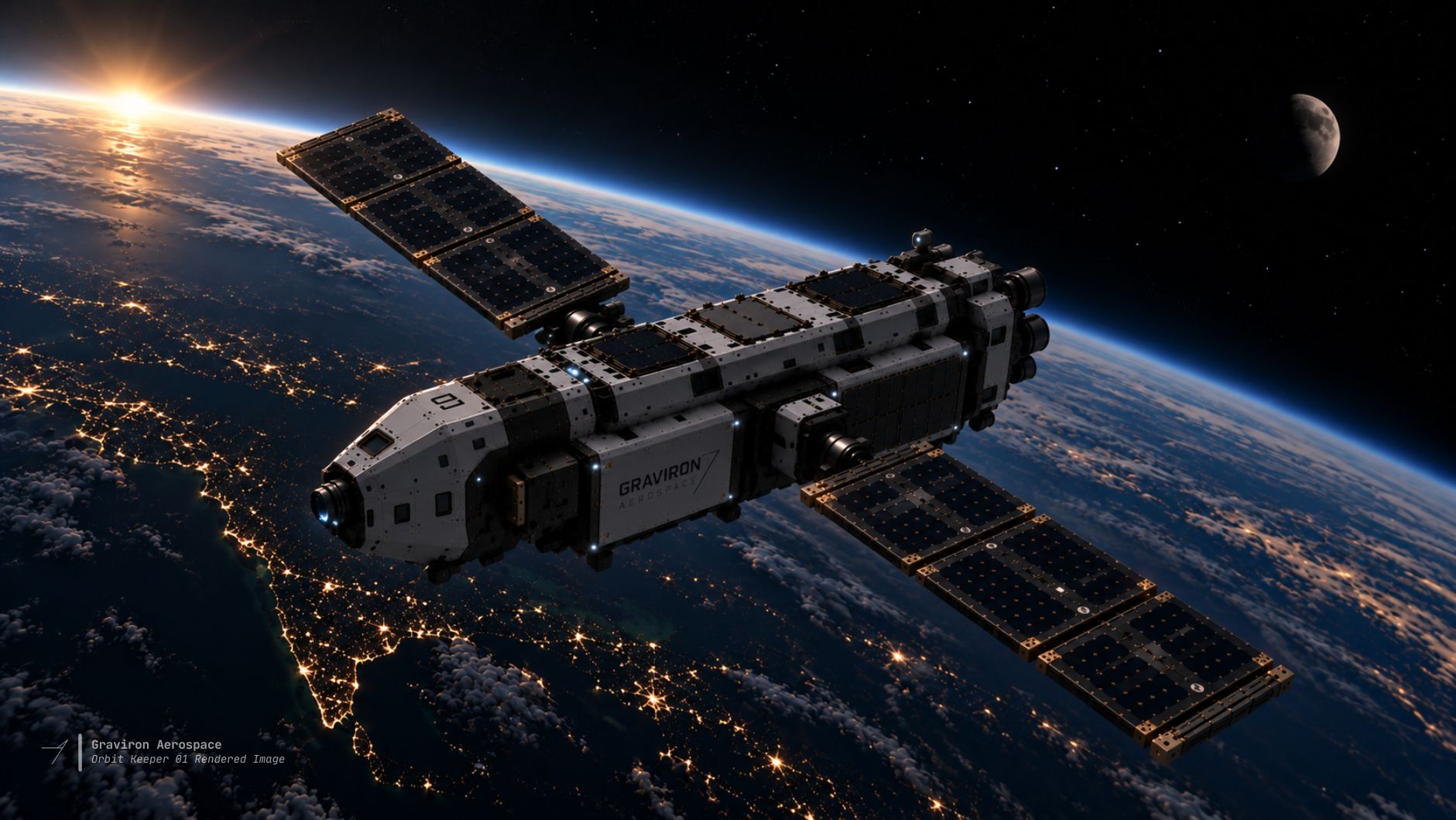
Building standardized orbital infrastructure to bring computing capabilities and customer payloads into Low Earth Orbit.
Accessing space has traditionally required organizations to develop, integrate, launch, and operate their own spacecraft. Graviron Aerospace is pursuing a different approach: developing standardized orbital infrastructure that enables customers to access computing capabilities and fly compatible hardware in orbit without building an entire satellite around every mission.
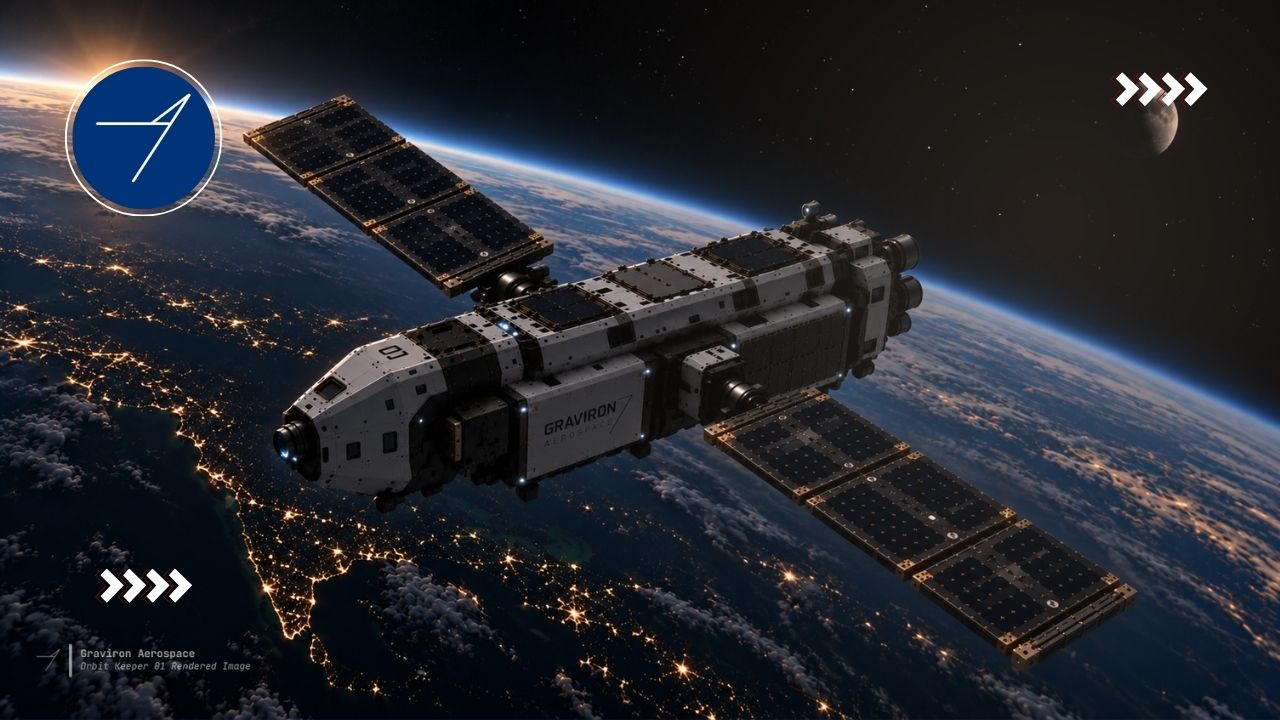
Through Orbit Keeper 01, Graviron is developing two core commercial services: Orbital Compute and Hosted Payload. Together, these services form the foundation of the company’s approach to commercial orbital infrastructure, with Orbital Compute at the center of its service strategy.
Orbital Compute: Bringing Computing Infrastructure Into Orbit
As demand for computing continues to grow, the infrastructure required to power, cool, and scale terrestrial data centers faces increasing pressure. Space offers a different environment for computing infrastructure, with access to abundant solar energy, radiative cooling, and the potential to scale beyond some of the physical and energy constraints associated with building data centers on Earth.
Graviron Aerospace is developing Orbital Compute to bring computing capabilities into Low Earth Orbit through Orbit Keeper 01. By making computing infrastructure available in space, Graviron is working toward a new approach to accessing and operating computing resources beyond Earth’s surface.
The opportunity is attracting growing industry attention. Companies such as Starcloud are pursuing space-based data centers designed to take advantage of orbital solar energy, cooling, and the ability to expand computing capacity beyond terrestrial infrastructure constraints.
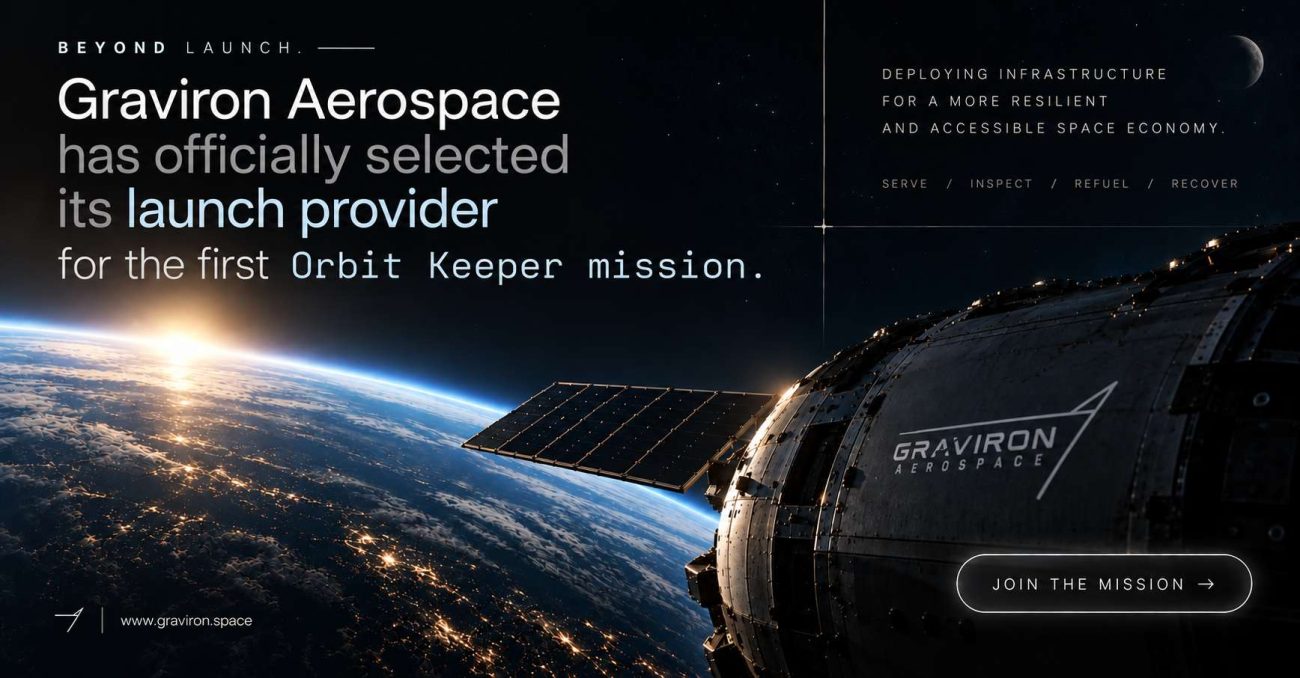
Graviron’s approach centers on Orbit Keeper 01, its first commercial spacecraft, which is being developed to support orbital computing alongside hosted payload services. Orbital Compute is a core part of Graviron’s commercial strategy and its vision for standardized infrastructure that brings computing capabilities into orbit.
Hosted Payload: Accessing Orbit Without Building an Entire Satellite
Graviron’s second core service is Hosted Payload, which enables customers to fly compatible instruments, sensors, experiments, and other hardware aboard Orbit Keeper 01.
Developing a dedicated satellite involves much more than the payload itself. Customers must also account for spacecraft engineering, power, thermal management, communications, attitude control, integration, and orbital operations. For organizations whose primary objective is to operate a particular instrument or technology in space, developing an entire spacecraft may introduce unnecessary complexity.
Hosted Payload addresses this challenge by providing access to a shared orbital platform. Customers can focus on their own hardware and mission requirements while Graviron develops and operates the supporting spacecraft infrastructure.
This model can serve commercial space companies, technology developers, research organizations, and other customers seeking orbital access for compatible payloads. It provides an alternative to building a complete spacecraft for every mission while making use of the infrastructure developed for Orbit Keeper 01.
One Platform. Two Complementary Services.
Orbital Compute and Hosted Payload address different customer requirements, but both rely on a common foundation: standardized orbital infrastructure operated by Graviron.
Orbital Compute provides access to onboard computing capabilities. Hosted Payload provides access to orbital capacity for compatible customer hardware. Together, they allow Orbit Keeper 01 to support different ways of using space without requiring each customer to develop an independent spacecraft.
The combination is central to Graviron’s strategy. Rather than organizing its commercial offering around a single type of payload or workload, the company is developing a platform designed to support both computing demand and customer payload demand.
This shared infrastructure approach also establishes the foundation for future Orbit Keeper fleet development.
A Standardized Fleet Designed Around Commercial Demand
Orbit Keeper 01 is the first spacecraft in Graviron’s development program. As the company progresses toward future fleet deployments, the intended strategy is to configure the composition of new satellites in response to commercial demand.
For example, if demand for orbital computing grows more rapidly, future spacecraft configurations could allocate a greater proportion of available capacity to computing hardware. If customer demand for hosted payloads is stronger, future configurations could prioritize payload capacity instead.
This approach gives Graviron a way to align future fleet development with the services customers need. The precise configuration of each spacecraft will depend on its engineering requirements, but the underlying commercial principle is straightforward: future deployments should be shaped by market demand rather than assuming every satellite must provide the same balance of services.
The flexibility lies in planning and configuring future spacecraft — not in changing the service configuration of an operational satellite after it has reached orbit.
Standardization provides the common foundation, while configuration choices allow the future fleet to respond to changing commercial requirements. As Graviron gains experience from its first mission, that experience will inform subsequent spacecraft development and fleet planning.
Building Graviron’s Commercial Orbital Infrastructure
Graviron Aerospace is developing Orbit Keeper 01 Vector as its first commercial spacecraft, with the first commercial mission targeted for Q2 2028. The mission is intended to establish the initial operational foundation for the company’s Orbital Compute and Hosted Payload services.
The company’s focus is to make access to orbital infrastructure more accessible through a standardized platform that customers can use for computing capabilities or compatible hardware payloads. As the program advances, operational experience and commercial demand will help guide the development of future Orbit Keeper satellites.
Graviron’s direction is built around a clear principle: provide customers with access to the capabilities they need in orbit, through shared infrastructure designed to support a growing range of commercial requirements.
With Orbital Compute and Hosted Payload as a commercial offering, and a standardized fleet strategy connecting the two, Graviron is developing the foundation for its next stage of commercial space operations.
Interested in Orbital Compute or Hosted Payload services?
Commercial space companies, technology developers, and potential mission partners can contact Graviron Aerospace to discuss their requirements and explore opportunities to work with Orbit Keeper.
Graviron Aerospace, Inc.