Blog
Graviron Aerospace Emerges from Stealth with a Vision to Build Distributed Data Centers in Orbit

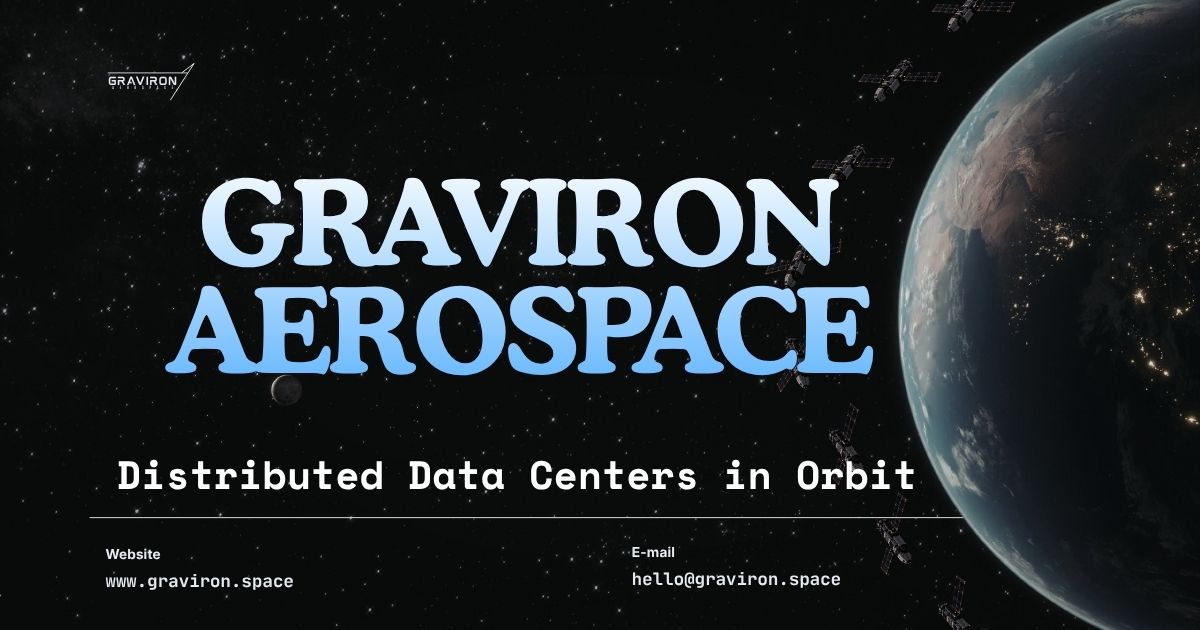
In December 2025, Graviron Aerospace was founded around a simple belief: The future of humanity will not be built solely on Earth.
As computing demand continues to grow, the infrastructure required to support artificial intelligence, scientific research, and other compute-intensive workloads is expanding rapidly. This raises important questions about how and where the next generation of computing infrastructure will be developed.
At Graviron Aerospace, we believe that space could become an important part of that future.
We are developing a distributed network of standardized orbital computing satellites designed to bring data centers into space, expanding computing capacity beyond traditional terrestrial infrastructure.
On April 27, 2026, Graviron Aerospace was officially incorporated as a Delaware C-Corporation and continues its operations from San Francisco, California.
Our mission is to develop the spacecraft and computing systems needed to establish a scalable network of distributed data centers in orbit.
Building Distributed Data Centers in Orbit
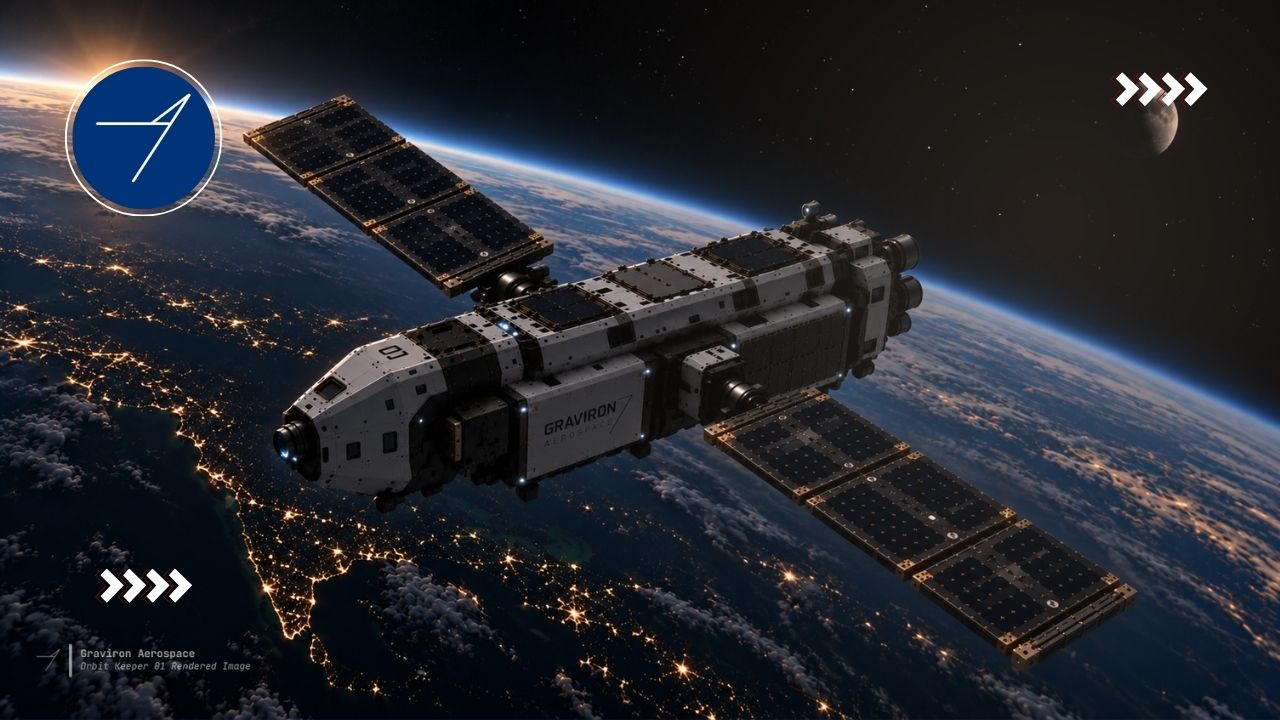
Graviron’s primary focus is developing a network of standardized Orbit Keeper satellites, with each spacecraft designed to contribute onboard computing capacity to a broader orbital data-center network.
Rather than depending on a single large orbital facility, our approach is based on expanding computing capacity through successive spacecraft deployments.
Each Orbit Keeper satellite is being developed around the systems required to support orbital computing, including onboard computing hardware, electrical power generation, thermal management, communications, and spacecraft control.
This approach is intended to establish a repeatable architecture for deploying additional computing capacity as the network develops.
We see several important engineering considerations in making this possible:
- Solar Energy: Using orbital solar arrays to generate electrical power for onboard computing systems.
- Radiative Cooling: Developing thermal-management systems capable of rejecting waste heat generated by computing hardware.
- Distributed Architecture: Expanding computing capacity through multiple spacecraft rather than relying on a single orbital facility.
- Standardized Spacecraft: Developing repeatable spacecraft configurations to support successive deployments and fleet expansion.
Our objective is to make computing capacity in orbit accessible to organizations beyond the traditional aerospace industry, including AI companies, cloud providers, enterprises, and research institutions.
Introducing the Orbit Keeper Program
Orbit Keeper is Graviron’s standardized spacecraft program and the foundation of our planned distributed orbital data-center network.
The program is being developed around a family of spacecraft configurations designed to support the expansion of orbital computing capabilities over time.
Standardization is central to this approach. Instead of treating every spacecraft as an independent development project, we aim to establish a consistent platform architecture that can evolve through successive configurations and missions.
As the fleet grows, additional Orbit Keeper satellites are intended to contribute further computing capacity, progressively expanding the network.
Our First Spacecraft: Orbit Keeper 01 Vector
Orbit Keeper 01 Vector is the starting point of Graviron’s orbital data-center program.
Currently in development, Vector is being designed to carry onboard computing hardware into Low Earth Orbit (LEO), establishing the initial computing node for Graviron’s planned distributed network.
The spacecraft’s development involves advancing its core systems, including computing hardware, power generation, thermal management, communications, and spacecraft control.
Our first commercial orbital mission is targeted for Q2 2028. This mission is intended to establish the initial operational foundation for Graviron’s orbital computing program.
Beginning in late 2028, our focus will shift toward developing additional Orbit Keeper satellites and expanding the fleet.
The objective extends beyond deploying a single spacecraft. We aim to develop a growing network in which successive missions contribute additional computing capacity and support the long-term expansion of data centers in orbit.
Looking Beyond Low Earth Orbit
Our immediate priority is developing Orbit Keeper 01 Vector and establishing the foundation of our distributed orbital data-center network in Low Earth Orbit.
Over the longer term, we believe orbital computing could become part of a broader space infrastructure ecosystem.
Future developments in lunar communications, deep-space networking, and computing beyond Earth could create new opportunities for infrastructure supporting missions farther from our planet.
These remain long-term possibilities rather than current development commitments. Our focus today is on building the spacecraft and computing capabilities needed to establish orbital data centers.
We believe the future of computing infrastructure should not be limited to the surface of Earth.
Humanity has spent decades learning how to reach space. The next challenge is expanding what humanity can do with it.
“The future of space will require more than the ability to launch spacecraft. It will require infrastructure capable of supporting increasingly complex activities beyond Earth. At Graviron, we’re working toward that future by developing distributed data centers in orbit.”
— Atul Raj
Founder & Chief Executive Officer, Graviron Aerospace
As Graviron Aerospace progresses toward its first commercial mission, we will share updates on spacecraft development, orbital computing research, engineering milestones, and the continued expansion of the Orbit Keeper program.
Beyond Launch.
About Graviron Aerospace
Graviron Aerospace is an aerospace company developing distributed data centers in orbit through a fleet of standardized Orbit Keeper satellites. Its orbital computing network is being designed to provide computing capacity for AI and other compute-intensive workloads beyond Earth.
The company’s initial spacecraft, Orbit Keeper 01 Vector, is in development, with its first commercial mission targeted for Q2 2028. Graviron plans to expand its Orbit Keeper fleet through successive spacecraft deployments, progressively developing its distributed orbital data-center network.
Graviron Aerospace, Inc.