Blog
Graviron Aerospace Advances Orbit Keeper to Technology Readiness Level 3

May 2026
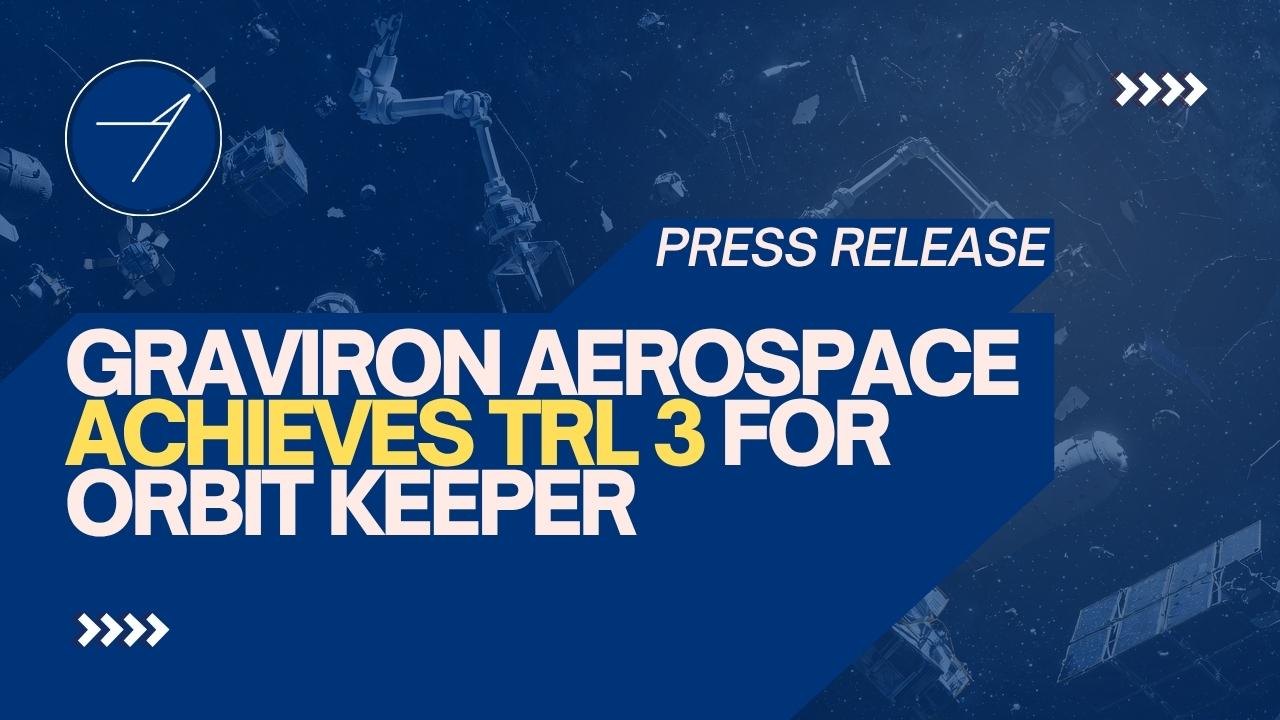
Graviron Aerospace has announced that its Orbit Keeper program reached Technology Readiness Level 3 (TRL 3), marking a milestone in the early engineering and proof-of-concept development of the program.
The milestone reflects progress in analytical studies, concept evaluation, and early proof-of-concept work conducted during the program’s initial development.
Technology Readiness Levels provide a framework for assessing the maturity of technologies, from initial scientific principles through development and eventual operational use. TRL 3 generally represents analytical and experimental proof of concept, where initial evidence supports the feasibility of a proposed technical approach.
Advancing Orbit Keeper Development
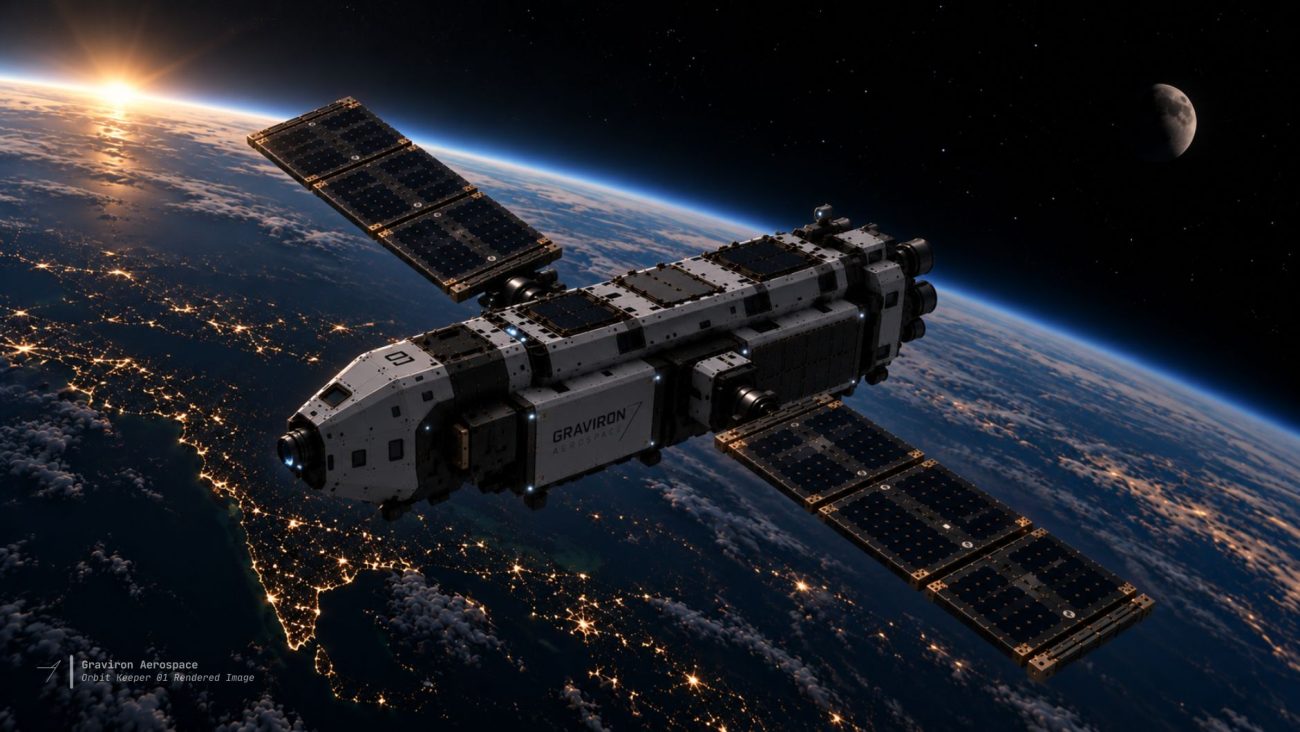
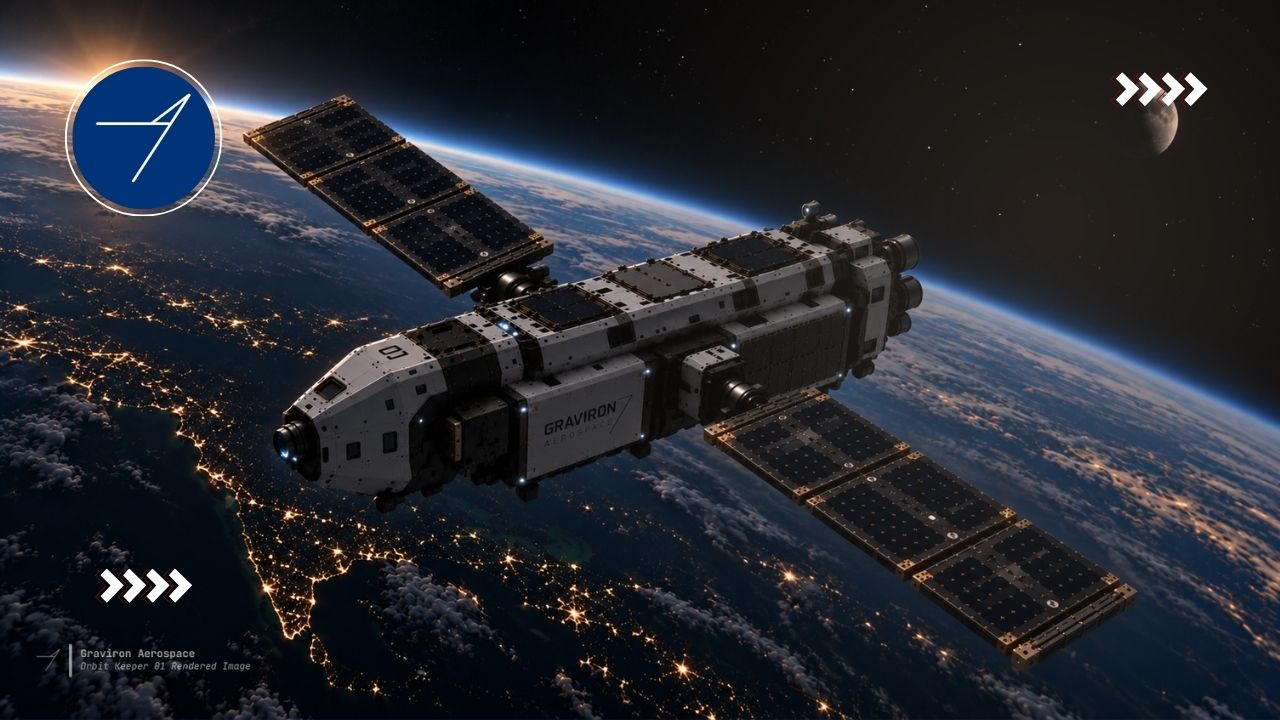
Orbit Keeper is Graviron Aerospace’s family of standardized orbital platforms, being developed to provide hosted payload and orbital computing services in Low Earth Orbit (LEO).
The program’s current focus is Orbit Keeper 01 Vector, the first spacecraft configuration being developed for commercial operations. Its intended services include hosting compatible customer payloads and supporting onboard orbital computing capabilities.
The initial TRL 3 milestone belongs to the program’s earlier technology-development work. It should be understood in that context rather than as evidence that the complete spacecraft, its hosted-payload service, or its orbital-computing capabilities have reached operational maturity.
As Orbit Keeper progresses, Graviron’s engineering work will focus on developing the spacecraft architecture and the systems required to support its intended commercial mission.
From Early Validation to a Commercial Spacecraft
Developing an orbital platform requires progress across multiple engineering disciplines, including spacecraft design, payload integration, power management, thermal control, avionics, communications, and onboard computing.
The maturity of individual technologies and the readiness of an integrated spacecraft are distinct. A technology-readiness milestone does not, by itself, establish that a complete spacecraft is ready for launch or commercial operations.
Graviron’s current objective is to develop Orbit Keeper 01 Vector into a commercial orbital platform with standardized interfaces and defined capabilities for hosted payloads and orbital computing.
The first commercial mission is targeted for Q2 2028 and is intended to carry customer payloads alongside Graviron’s onboard orbital-computing capability.
Beginning in late 2028, the company plans to focus on fleet development, informed by experience gained from operating in orbit and subsequent engineering work.
Building Toward a Standardized Fleet
Orbit Keeper is being developed around a fleet-based strategy rather than one-off spacecraft designed separately for each customer. Standardized configurations and defined interfaces are intended to support repeatable integration and the expansion of commercial service capacity over time.
The initial priority is Orbit Keeper 01 Vector. Future configurations within the Orbit Keeper family are intended to extend the platform’s capabilities as development progresses.
Graviron will continue sharing updates on engineering milestones, spacecraft development, payload integration, orbital-computing capabilities, and progress toward its first commercial mission through its newsroom.
About Technology Readiness Levels
Technology Readiness Levels (TRLs) are a framework used to assess technology maturity. TRL 3 generally represents analytical and experimental proof of concept. A technology’s readiness level does not necessarily indicate the maturity of an entire spacecraft or commercial service.
About Graviron Aerospace
Graviron Aerospace is a space logistics company building a fleet of standardized Orbit Keeper satellites to provide hosted payload and orbital computing services in Low Earth Orbit. Its first commercial mission is targeted for Q2 2028, followed by a planned focus on fleet development from late 2028.
Graviron Aerospace, Inc.