
Blog
Why NASA Just Bet $30 Million on a Space Startup

Launching a satellite used to mark the beginning of its operational life. But what happens when that spacecraft begins losing altitude, runs low on propellant, or can no longer perform its mission?
For decades, the conventional answer was to retire the spacecraft and build another one. Today, the space industry is exploring additional options: servicing satellites, extending their operational lifetimes, repositioning spacecraft, and developing infrastructure that supports activities after launch.
These capabilities are creating a new area of the commercial space economy. NASA’s $30 million contract with Katalyst Space Technologies to attempt to rescue the Neil Gehrels Swift Observatory offered a particularly striking example of both the opportunity and the technical difficulty involved.
The $30 Million Mission to Save Swift
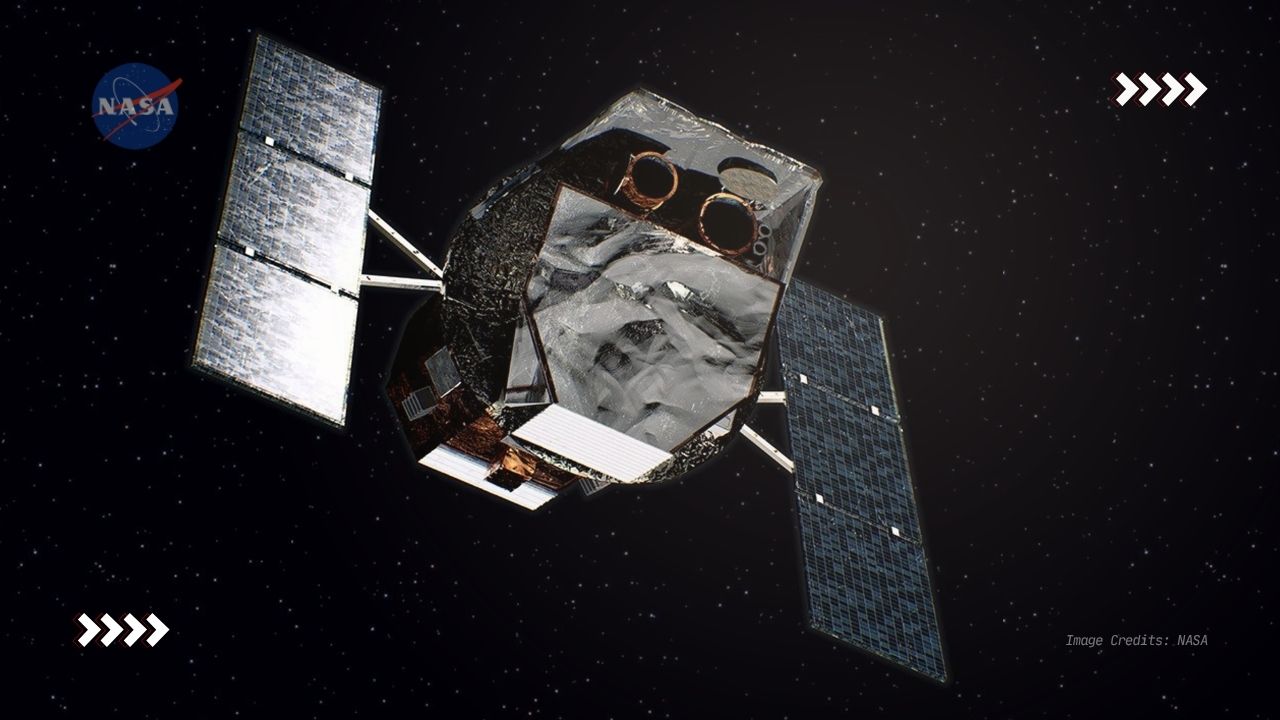
NASA awarded Katalyst Space Technologies a contract in September 2025 to develop and launch a spacecraft capable of rendezvousing with the Neil Gehrels Swift Observatory, capturing it, and raising it to a higher orbit.
Launched in 2004, Swift has spent more than two decades studying gamma-ray bursts and other high-energy astronomical events. Increased solar activity accelerated its orbital decay, creating an urgent need to address its declining altitude.
Rather than attempting to replace the observatory, NASA pursued a commercial servicing solution that could potentially extend the mission’s life.
The mission was ambitious. The servicing spacecraft, named LINK, had to reach Swift, approach it safely, capture it, and change its orbit. Each step required precise navigation, spacecraft control, and coordination between two independent vehicles.
However, the mission did not achieve its original objective. In August 2026, NASA and Katalyst announced that LINK would not capture or boost Swift because of persistent spacecraft attitude-control problems. Katalyst subsequently concluded the LINK mission in September 2026.
Although the planned rescue was not completed, the mission produced valuable engineering and operational experience for future commercial spacecraft-servicing efforts.
The outcome illustrates an important reality: in-space servicing could create significant value, but it also involves difficult technical challenges and mission risks.
Why Spacecraft Servicing Matters
Building and launching a spacecraft requires substantial engineering, manufacturing, testing, and launch expenditure. When a spacecraft reaches orbit, its value may continue for years or even decades.
If an otherwise useful satellite can no longer operate effectively because of orbital decay, limited propellant, or another constraint, replacing it may not always be the only option worth considering.
Depending on the spacecraft’s design and condition, future servicing missions could potentially:
- Raise or adjust a spacecraft’s orbit.
- Extend the operational life of compatible satellites.
- Inspect spacecraft and assess their condition.
- Reposition satellites for different mission requirements.
- Support the removal of certain non-operational spacecraft.
These capabilities are not interchangeable. Each requires different spacecraft designs, interfaces, sensors, propulsion systems, and operational procedures. Some satellites are designed with servicing in mind; others may be difficult or impossible to capture safely.
The commercial opportunity therefore depends not only on demand, but also on technical feasibility, customer economics, and the availability of suitable servicing systems.
The Technical Challenge of Operating in Orbit
Rendezvous and proximity operations (RPO) involve bringing one spacecraft close to another in a controlled manner. These operations are important for missions such as inspection, servicing, docking, and certain forms of orbital transportation.
Unlike conventional satellite operations, RPO requires a spacecraft to account for the relative motion of two vehicles, determine their positions and orientations, and execute carefully controlled manoeuvres.
Capturing an unprepared spacecraft presents additional challenges. The target may not have dedicated docking interfaces, may be tumbling, or may have limited information available about its condition.
The LINK mission demonstrated how demanding these operations can be. It also highlighted why attitude control, spacecraft reliability, navigation, and mission planning are essential to future servicing systems. <Cite refs={[“turn699645search2″,”turn699645search4”]}/>
As commercial space activity expands, these technologies may become increasingly important to missions that require spacecraft to interact with existing orbital assets.
Beyond Launch: The Broader Space Infrastructure Opportunity
Space infrastructure encompasses more than servicing and satellite life extension. Different companies are developing different capabilities to support commercial activity after launch.
These include hosted payload platforms, orbital computing, communications systems, in-space transportation, and technologies for future lunar and deep-space missions.
Each addresses a different requirement. Hosted payload platforms give customers access to spacecraft capacity without requiring them to develop an entire satellite. Orbital computing aims to make computing resources available in space. Servicing vehicles address particular needs involving existing spacecraft.
Together, these areas illustrate how the space economy may evolve from a focus on deploying individual spacecraft toward a broader ecosystem of orbital capabilities.
That does not mean every company must develop every capability. The industry will depend on specialized platforms, distinct technical approaches, and business models suited to different customer needs.
What This Means for the Future of Space
NASA’s Swift mission was an attempt to preserve a valuable scientific asset through commercial spacecraft servicing. Although the planned orbit boost did not occur, the mission demonstrated the level of ambition involved in developing and operating complex robotic spacecraft on a compressed schedule.
Its outcome also reinforces an important lesson: ambitious orbital missions require not only a compelling objective, but also robust engineering, reliable spacecraft systems, and careful management of technical risk.
The broader opportunity remains significant. As more organizations operate in space, demand will grow for different kinds of orbital capabilities, from hosted payloads and computing to communications and specialized servicing missions.
At Graviron Aerospace, our immediate focus is developing a fleet of standardized Orbit Keeper satellites for hosted payload and orbital computing services in Low Earth Orbit. Our first commercial mission is targeted for Q2 2028.
We view these services as the foundation of our current development strategy, while recognizing that the broader space economy will encompass many other technologies and business models.
Humanity has spent decades learning how to reach orbit. The next phase will involve developing the capabilities needed to use space in more varied and commercially sustainable ways.
Beyond launch, the opportunity lies in what we can build and operate in space.
Graviron Aerospace, Inc.